English

Views: 0 Author: Site Editor Publish Time: 2026-03-20 Origin: Site
Wood Plastic Composite (WPC) decking has quickly turned into a top pick over old wood decking. It offers strong build, easy upkeep, and a fresh look. Yet, lots of homeowners and a few builders still think decking boards need visible screws. This is like with regular wood decks. In truth, expert WPC decking setups seldom use screws as the key way to fix things. They pick hidden clip fastening setups instead.
This brings up a key question.
Why do experts skip screws when setting up WPC decking?
The reply goes past looks. It ties into material facts, build engineering, and lasting results. To grasp this fully, we need to look first at why screws really don't work well for WPC decking.
Unlike real wood, WPC decking is a mix material. It swells and shrinks with weather shifts. Screws driven right through the boards hold the stuff tight in spot.
This makes a big issue.
When the board grows in warmth, inside pressure builds up. There is no space to let it go. This pressure gathers near the screw spots. It turns them into weak spots in the build. After a while, this can cause:
l Cracking around fasteners
l Surface deformation
l Board warping or bulging
From an engineering perspective, this is a classic case of stress concentration caused by rigid constraints, especially at fixed points with no buffering capacity.
Today's WPC decking often has a joined-on guard layer. This fights off dampness, sun rays, and daily wear. Drilling screws through the top breaks this guard.
Every screw spot turns into a chance for water to get in. As time passes, wet can seep into the inner part. Then it leads to:
l Mold and mildew growth
l Internal material degradation
l Reduced structural strength
Visible screws significantly reduce the visual appeal of a deck. Instead of a clean, seamless surface, you get:
l Exposed screw heads
l Uneven alignment
l A more industrial look
Even when stainless steel screws are used, they are not completely immune to corrosion—especially in humid or coastal environments. The screw slots are particularly vulnerable, often leading to:
l Rust stains
l Surface discoloration
l Long term visual degradation
For high end residential or commercial projects, this is unacceptable.
Screw based installation is labor intensive. Every fixing point requires:
l Precise positioning
l Pre drilling
l Alignment and tightening
This significantly slows down installation and increases labor costs.
More importantly, screw fixed systems are difficult to repair. If a board is damaged:
l It cannot be easily removed
l Adjacent boards may need to be dismantled
l Replacement becomes time consuming and costly
In short, screw installation is slow, inflexible, and irreversible.
To address these issues, the industry has developed clip fastening systems specifically for WPC decking.
These systems use:
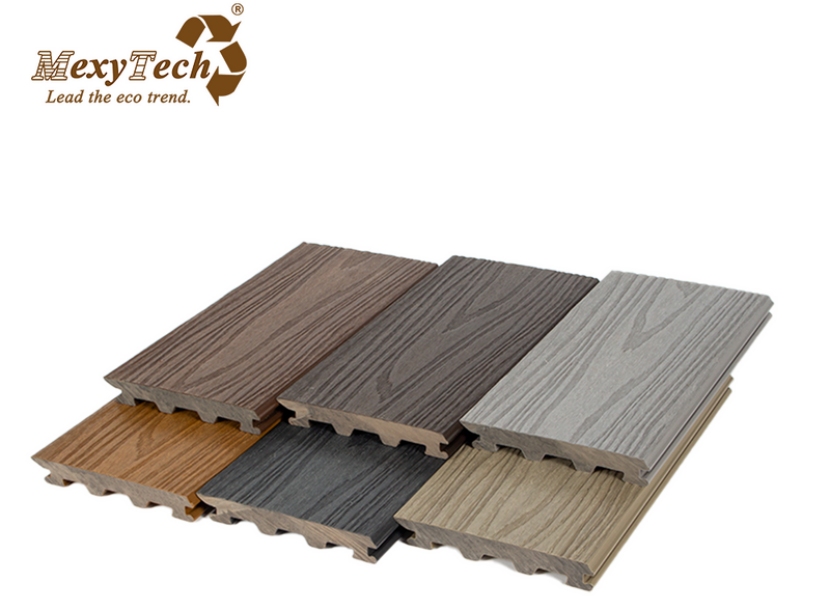
l Grooved edge decking boards
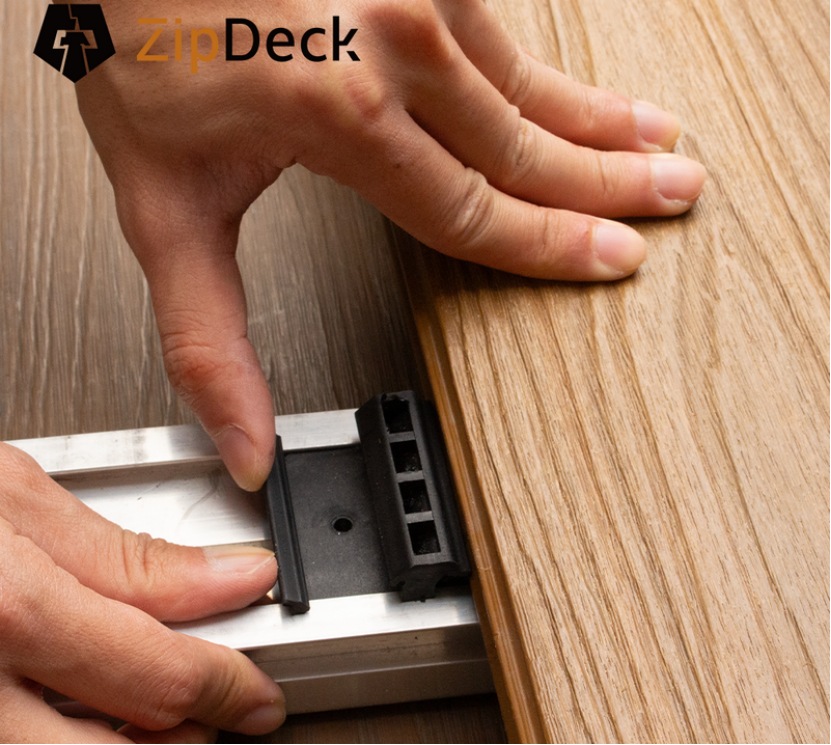
l Hidden clips (plastic, stainless steel, or aluminum)
l Screws that fix clips to the joists—not the boards
Instead of penetrating the board surface, clips secure the boards from the sides. This creates a floating installation system, where boards are held firmly in place while still allowed to move slightly. This design aligns with how WPC materials behave in real world environments.
Because there is no surface drilling:
l No stress concentration points
l No cracking around fasteners
l Better preservation of board integrity
This significantly extends the lifespan of the decking.
Clip systems allow boards to:
l Expand under heat
l Contract in cooler conditions
l Move slightly within controlled limits
This prevents:
l Warping
l Buckling
l Long term deformation
In essence, clip systems work with the material, not against it.
Without screw holes penetrating the surface:
l The protective layer remains intact
l Water ingress is minimized
l Internal structure stays stable
This is critical for long term outdoor performance.
Clip systems are hidden from view, resulting in:
l Smooth, uninterrupted surfaces
l Consistent board alignment
l A high end architectural finish
This is why they are widely used in:
l Luxury residential decks
l Resorts and hotels
l Commercial outdoor spaces
While traditional clip systems already offer significant advantages, newer innovations are pushing efficiency even further. One standout example is the MexyTech's ZipDeck tool free locking system.
ZipDeck eliminates the need for tools during board installation. Instead of screws or even clip fastening steps, boards can be:
l Positioned
l Pressed into place by hand
l Instantly locked
This system dramatically improves installation speed:
l Single board replacement takes approximately 30 seconds
l Overall installation efficiency increases several times
l Labor costs can be reduced by up to 40%
For contractors and large scale projects, this translates into substantial savings.
Perhaps the most important benefit is replaceability.
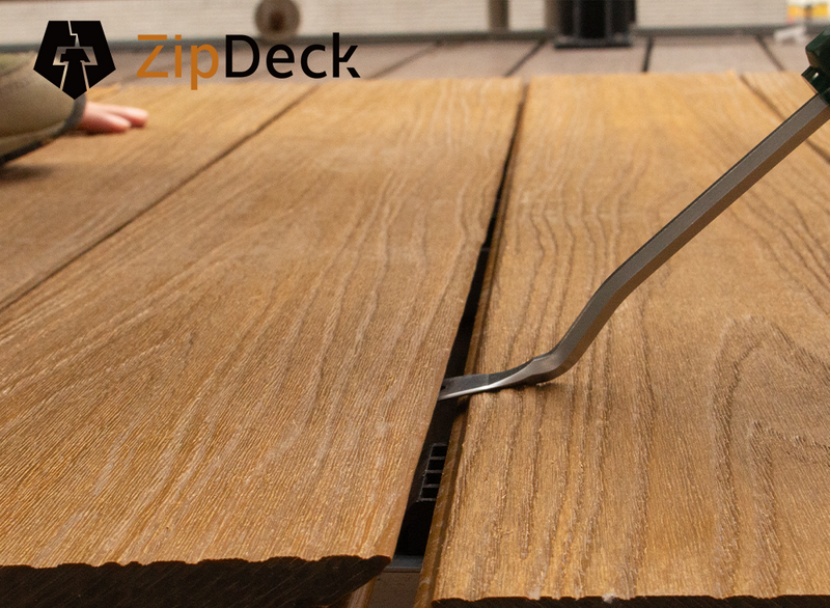
With traditional screw systems, replacing a damaged board is difficult and disruptive. With ZipDeck:
l Individual boards can be removed independently
l No need to dismantle surrounding boards
l Maintenance becomes fast and low cost
This represents the ultimate evolution of the “no screws” philosophy.
Choosing the right fastening system is not just about clips—it requires a system level approach.
Different clips create different spacing:
l Standard plastic or aluminum clips: ~5 mm gaps (recommended for airflow and drainage)
l Stainless steel clips: can reduce gaps to ~2 mm for a tighter look
l Seamless solutions: specialized systems (e.g., buffered locking designs)
l Long term commercial projects: prioritize stability, standard clip systems
l Temporary installations or high maintenance scenarios: prioritize speed, tool free systems like ZipDeck
l High end designs: choose narrow gap or seamless systems
A clip system only performs well when combined with proper installation parameters:
l Joist spacing ≤ 450 mm
l Board gap ≈ 5 mm
l Perimeter expansion gap ≥ 10 mm
l Recommended joist material: aluminum
This highlights an important principle: A clip system is not just a component—it is part of a complete engineered system.
Although clips are the standard, screws are still used in limited situations:
l Starter boards
l Edge boards
l Stair installations
Even in these cases, visible screws are minimized as much as possible.
The use of screws in WPC decking is not just outdated—it introduces fundamental structural problems:
l Stress concentration and cracking
l Water intrusion and material degradation
l Poor aesthetics
l Inefficient installation and difficult maintenance
Clip fastening systems solve these issues by aligning with the physical behavior of composite materials. Advanced systems like ZipDeck take it even further by improving installation speed and enabling easy board replacement.
Final takeaway:
New WPC decking is made to shift, breathe, and work over time. Only clip setups let it do that just right. If you want a neat, tough, and long run fix for your outdoor deck job, MexyTech has a line of good WPC decking stuff. It's built for simple, fast setup with new clip fastening systems. Our items handle hard weather while keeping strength and looks for years. Check out MexyTech today. See our picks of WPC decking fixes and find the right one for your next job.
Clip fasteners stop stress gathering, cracking, and water seeping. They make a deck that lasts longer and stays steadier than screw setups.
Clip systems let boards grow and shrink natural. They keep water out well and give a neater, nicer finish.
Clips hold boards from sides. So they skip top drilling. This cuts cracking and keeps the guard layers safe.
ZipDeck is a no tool, lock clip setup. It boosts setup speed a lot and cuts work costs. Plus, it lets easy board swaps.
Screws fit in few spots like starter boards, edge boards, and stair setups. But they get kept low for nice looks and good work.