English

Views: 0 Author: Site Editor Publish Time: 2026-05-29 Origin: Site
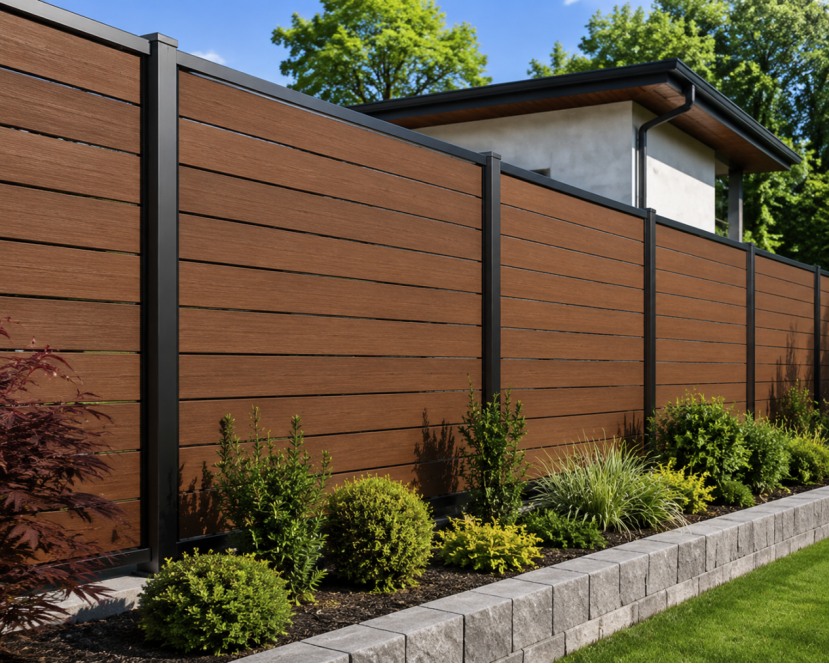
If you are a fence distributor in North America or Europe, your 2026 spreadsheets probably look a lot different than they did two years ago. The question is not only about the cost of fence boards anymore. It is about the unpredictable line item titled “tariffs,” the risk of wrong HS Code classification, and the new pressure to prove where wood fiber comes from.
Aluminum fencing is still widely used because it is strong, clean looking, and familiar to contractors. But in 2026, aluminum heavy fence systems are becoming harder to price with confidence.
The problem is not only the material cost.
Some aluminum extrusion categories have faced significant AD/CVD scrutiny in recent years, but the final duty impact depends on product scope, supplier status, country of origin, and customs review.
Aluminum WPC hybrid fencing sits in an interesting middle ground. It does not fully leave aluminum behind, but it also does not rely on large aluminum surfaces like some traditional fence systems. Posts, frames, and support structures need to hold up in real outdoor conditions. At the same time, large aluminum sections may increase cost pressure. This is where a more balanced material design becomes useful.
A practical fence system should not chase cost reduction in a blind way. The smarter question is where aluminum is necessary and where another material can do the job better. In an aluminum WPC fence system, aluminum can stay in posts, frames, or key support areas. WPC boards can then cover larger visible surfaces.
MexyTech does not ask buyers to give up aluminum completely. Instead, its aluminum WPC fencing system keeps aluminum in structural areas such as posts, frames, and supports, while using WPC boards for the visible fence surface. This helps buyers balance strength, appearance, and material cost control. Test reports show that MexyTech's aluminum reinforced WPC columns can withstand the strength of a Category 3 hurricane.
WPC fencing is not a perfect replacement for every aluminum fence project. That would be too simple. But it is becoming a practical choice for who want lower maintenance, a natural appearance, and more stable material planning.
WPC fence boards are usually made from wood fiber or wood flour combined with plastic polymers. This gives the product a wood like surface while improving resistance to moisture, rot, and insects. Compared with natural wood, it does not need frequent painting or staining.
Common project uses include:
· Residential privacy fencing
· Garden and backyard fencing
· Landscape boundary fencing
· Commercial outdoor areas
· Matching fence and gate systems
MexyTech offers WPC fence, WPC gate, decking, and outdoor cladding products, which makes it easier to build a coordinated outdoor material package. This matters more than people think. A fence that matches decking or wall cladding can make the whole space look less pieced together.
Unit price is only one part of the decision making process. Take a 100 meter long fence project as an example.
Cost Factor | Aluminum Fence | MexyTech WPC / Aluminum WPC Fence |
Initial material cost | Higher aluminum profile cost | More stable composite board cost |
Tariff exposure | May vary by HS Code, origin, and AD/CVD review | May have different classification treatment, subject to customs confirmation |
Structural strength | Strong metal structure | Aluminum support + WPC boards balance strength and cost |
Surface maintenance | Scratches and dents may require repair or replacement | Low maintenance, no frequent painting or staining |
Long term appearance | Modern metal look | Wood like texture with outdoor durability |
Compliance focus | Origin, tariff, AD/CVD documents | HS Code, EUDR wood fiber traceability, FSC/CoC documents |
A useful formula is:
TCO = Initial Purchase Cost + Tariff/Duty Risk + Maintenance Cost + Replacement Risk + Compliance Cost
For a 100 meter fence project, aluminum may look simple at the quotation stage, but the final cost can change after tariff review, freight, surface damage, or replacement needs. If the tariff changes from 5% to 30% due to an HS Code misclassification, the profit of a 100 meter project will be reduced to zero. MexyTech WPC fencing can help buyers control visible surface cost, reduce maintenance pressure, and keep aluminum only where structural support is needed. A UK distributor saved 18% on total landed costs by replacing its high aluminum usage system with MexyTech's MecoFence.
Different fence systems may be reviewed differently. A full aluminum fence, a WPC fence panel, and an assembled aluminum WPC fence kit may not be treated in the same way.
Wrong classification can lead to delayed clearance, extra duty, revised tax bills, or even shipment problems. “Composite fence” or “outdoor fence panel” is not always enough for customs review. Product drawings, material composition, photos, packing details, and use descriptions all help reduce confusion. Whether aluminum wood composite fences should be classified as aluminum products or wood plastic composite products can result in a huge difference in tariffs, ranging from 0% to 25%, depending on the classification. This ambiguity is exactly what buyers fear most.
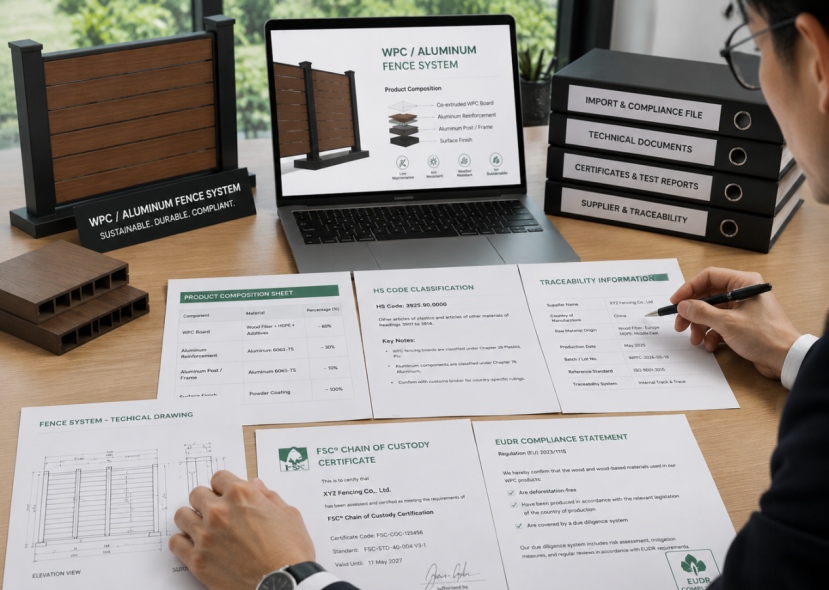
MexyTech can support product composition sheets, material descriptions, technical drawings, product photos, and preliminary HS Code references. Final classification should always be confirmed by the importer, customs broker, or local customs authority, but complete supplier documents can reduce customs surprises before shipment.
WPC fencing has another issue to consider: wood fiber traceability. Because WPC products can contain wood fiber or wood flour. The EU Deforestation Regulation makes this more important. By the end of 2026, larger EU operators will need stronger documentation for covered products linked to wood and other regulated commodities.
A factory that cannot explain its wood fiber source may become harder to work with for EU projects. MexyTech has prepared a complete set of Geolocation traceability data, which is currently the most troublesome compliance requirement for European buyers and is also MexyTech's core competitiveness.
FSC certification can support buyer confidence, but EUDR still requires due diligence, traceability, and risk assessment. The key is not only whether the product looks sustainable, but whether the wood fiber source can be documented. The stronger position is clear documentation.
Material performance is not only about strength. Surface behavior also matters. In coastal or high UV environments, fencing materials face salt air, sunlight, moisture, and daily cleaning. Over time, these factors can affect color, surface texture, and repair costs.
Traditional powder coated aluminum has a clean and modern look. However, scratches, dents, and coating damage may become visible after transport, installation, or long term use. Repairing those marks is not always simple, especially when the same color finish must be matched across a large project.
ASA co-extruded WPC takes a different approach. The protective surface layer helps improve weather resistance and color stability, while the WPC core provides a wood like appearance and composite durability.
img.Comparison chart of aluminum fence and WPC aluminum fence for cost, strength, maintenance, and compliance.jpg
Before placing a bulk order, you should ask for a practical document package. This does not need to be complicated, but it should be complete enough for internal review and customs preparation.
Useful documents include:
· Product composition sheet
· Wood fiber source declaration
· FSC or Chain of Custody certificate, if available
· EUDR related traceability documents
· REACH or SVHC test report
· Wind load resistance report
· Installation guide
· Warranty document
· Product drawings and packing list
· Preliminary HS Code reference
MexyTech WPC fencing may meet the need to reduce reliance on aluminum without sacrificing outdoor practicality. It is especially relevant when aluminum cost makes project pricing unstable, or when you want a warmer wood like look. It can also fit privacy fence projects, garden projects, and commercial outdoor spaces where long term maintenance matters.
Before choosing a fence system, you can use a short checklist:
· Confirm whether the project is aluminum heavy or WPC heavy
· Ask for material composition documents
· Review HS Code with a customs broker
· Check EUDR related wood fiber traceability
· Request FSC or CoC documents if available
· Compare TCO instead of unit price only
· Ask for wind load or structural test reports
· Request samples before bulk purchasing
· Confirm warranty terms by product line
· Compare delivery time and after sales support
In 2026, you shouldn't compare aluminum fences and WPC fences solely based on unit price. Tariffs, HS code classifications, EU Corrosion Protection Regulations (EUDR) documents, maintenance costs, and the long term value of the project will all influence the final purchasing decision.
MexyTech's WPC and aluminum plastic composite fencing systems offer a practical solution that reduces reliance on aluminum while ensuring structural support in critical areas. For upcoming residential, commercial, or landscape fencing projects, please contact MexyTech for samples, technical documents, HS code references, and project quotations.
Is WPC fencing cheaper than aluminum fencing?
WPC fencing may offer lower long term cost when maintenance, tariff exposure, and replacement risk are considered. Final cost depends on project size, structure, supplier, and import rules.
What is the best alternative to aluminum fencing?
WPC fencing is a common alternative for buyers who want wood like appearance, low maintenance, and outdoor durability. Aluminum WPC hybrid fencing can also keep metal support where needed.
Does WPC fencing need EUDR documents?
For EU projects, WPC products containing wood fiber may require traceability documents. Buyers should ask suppliers for wood fiber source information and related compliance files.
How do I choose the HS Code for WPC fencing?
The HS Code should be reviewed by the importer, customs broker, or local customs authority. Product composition, structure, use, and drawings may affect classification.
How long does WPC fencing last outdoors?
Quality WPC fencing can offer long outdoor service life with low maintenance, but exact durability depends on material formula, installation, climate, and product warranty terms.