English

Views: 0 Author: Site Editor Publish Time: 2026-05-29 Origin: Site
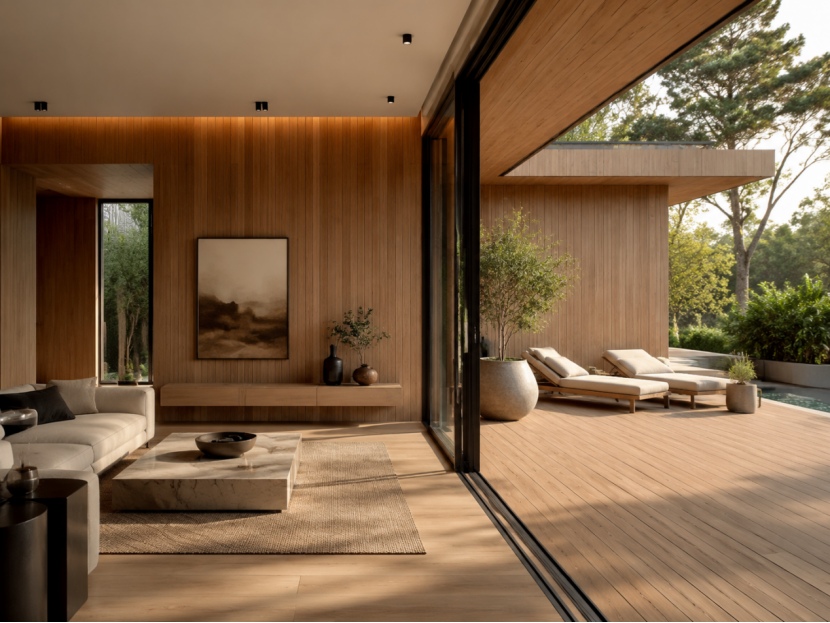
Interior and exterior design is no longer limited to using the same color both indoors and outdoors. The real challenge lies in finding WPC wall panels that can maintain a consistent wood grain appearance while meeting the different performance requirements of indoor and outdoor spaces. The exterior wall cladding determines the success or failure of the entire design, as the exterior wall panels must withstand the test of sunlight, rain, moisture, pests, and long term exposure to wind, sun, and rain.
In 2026, an increasing number of residential and commercial spaces will move towards an integrated design experience. People will no longer view wall panels merely as standalone building materials; they will seek a unified design language across different spaces.
WPC wall panels offer wood like colors, linear textures, and modern surface styles, without the cumbersome maintenance required of natural wood. WPC wall panels are increasingly becoming a practical choice.
It's important to note that interior wall panels typically prioritize aesthetics and quick installation, while exterior WPC wall panels require stronger weather resistance, water resistance, termite resistance, UV resistance, and dimensional control. Therefore, the outdoor rating is more crucial in determining the long term performance of the entire project.
WPC (wood plastic composite) is typically made from wood fiber and plastic composite materials, sometimes with additives to improve durability, color stability, or processing performance. Interior WPC wall panels are commonly used for decorative and feature walls. Their main advantages are visual comfort, ease of cleaning, lightweight installation, and a modern wood look finish.
Exterior WPC wall panels are different. They are used for building facades, villa walls, and commercial outdoor spaces. These panels need to withstand variable weather and long term outdoor environments, and must remain stable under high temperatures, rain, humidity, and sunlight.
Choosing the right supplier is crucial. The ideal choice is not to purchase interior and exterior wall panels separately, but rather to select a manufacturer that offers a complete WPC panel product line. This ensures a consistent visual style and avoids misusing interior grade materials in outdoor environments.
img.Wood grain WPC wall cladding on a modern residential exterior facade.jpg
Designers are extending the aesthetic of interior WPC to the outdoors, as users today focus on the overall space, not just a single wall.
The main project needs are clear:
· Homeowners want the patio to feel like part of the living room.
· Developers need consistent material palettes across apartments, villas, resorts, and commercial projects.
· Designers want wood like texture without the maintenance burden of natural timber.
This trend also presents a technical challenge. To meet requirements for UV resistance, water resistance, and outdoor stability, some manufacturers may sacrifice surface finish. A better solution isn't to force interior wall panels onto the outdoors, but to find a WPC manufacturer that can coordinate their interior and exterior product lines. MexyTech's interior and exterior wall panel products help clients create a more unified design while allowing them to choose the appropriate grade for different application scenarios.
Factor | Indoor WPC Wall Panels | Outdoor WPC Wall Cladding |
Main purpose | Decoration and interior comfort | Weather protection and facade durability |
Key requirements | Lightweight, stylish, easy to clean | UV resistance, water resistance, termite resistance |
Typical areas | Living rooms, kitchens, bathrooms, restaurants | Facades, patios, balconies, garden walls |
Installation focus | Fast interior installation | Ventilation, expansion gaps, outdoor fixing system |
Surface texture | More refined, decorative, and interior oriented | Often harder to balance natural texture with outdoor durability |
Buyer concern | Design match and indoor safety | Long term performance and low maintenance |
Indoor and outdoor panels can use the same design language, but they should not be treated as the same specification. The key challenge is that the outdoor WPC cladding must have stronger weather resistance while maintaining a wood grain texture similar to the indoor wall panels.
Comparison Factor | Indoor WPC Wall Panels | Outdoor ASA-WPC Cladding | Natural Wood |
Typical Lifespan | Suitable for long term interior use | Designed for long term exterior exposure | Depends heavily on species, climate, and maintenance |
Maintenance | Low maintenance, easy to clean | Low maintenance, no frequent painting or sealing required | Requires regular sealing, painting, anti-pest treatment, and repair |
UV Resistance | Not designed for strong long term outdoor UV exposure | Stronger UV resistance, especially with ASA co-extrusion surface technology | Can fade, crack, or discolor outdoors without maintenance |
Water Resistance | Suitable for interior humidity control | Designed for rain, humidity, and exterior moisture exposure | Can absorb water, warp, crack, or decay if not protected |
Fire Performance | Should be checked for interior project requirements | MexyTech outdoor/project grade options can support ASTM E84 Class A requirements for public spaces | Depends on wood type and treatment |
Formaldehyde/VOC Concern | Formaldehyde free options are important for indoor spaces | Lower indoor VOC concern when used outdoors, but material safety still matters | Natural wood may require coatings, stains, or treatments that affect VOC concerns |
Design Freedom | Strong color and texture flexibility | Better balance between outdoor durability and premium surface depth | Beautiful natural grain, but harder to keep consistent across large projects |
Cost Control | Good for decorative interior budgets | Higher initial value than basic WPC, but lower maintenance cost over time | Premium tropical hardwoods such as Ipe or Teak can be expensive |
Sustainability | Can reduce reliance on solid wood | Can use recycled materials and reduce tropical hardwood demand | Tropical hardwood sourcing may raise traceability and sustainability concerns |
One common complaint about outdoor WPC wall cladding is that it can look more plastic than indoor decorative panels. This usually happens because exterior materials need stronger protection against UV, rain, humidity, temperature changes, and surface wear. Some manufacturers increase durability but lose the fine surface depth that designers expect from premium interior wall panels.
MexyTech addresses this pain point through its NovAS series, which uses ASA co-extrusion technology for outdoor applications. The ASA surface layer is designed to improve outdoor color stability and weathering resistance. It supports 3000+ hours of UV resistance performance, helping the surface maintain better color stability under long term sunlight exposure.
More importantly, the NovAS ASA co-extrusion structure allows ≥1.0 mm ultra deep 3D embossing. This Deep Embossing surface gives the panel a more realistic wood grain texture, not only visually but also in touch. For projects that need outdoor wall cladding to match high end interior wood look panels, this is a major advantage.
Instead of accepting the usual trade off between outdoor durability and natural texture, MexyTech NovAS helps narrow the gap. It makes exterior WPC cladding feel closer to premium interior wood surfaces while still meeting outdoor performance expectations.
A unified WPC product line achieves its best results when color, texture, installation method, and performance level are coordinated. It's not simply a matter of "choose one brown panel and use it everywhere."
1. Warm wood tones can be used in living room interiors, paired with smooth decorative finishes. Balconies should use outdoor grade WPC finishes in similar colors but with stronger UV and water resistance.
2. Hotel lobby interior walls should reflect a refined guest experience, while exterior facades need to be weather resistant and easy to maintain to ensure long term use.
3. For villa entrance walls and garden fences, texture consistency is particularly important. Exterior WPC finishes should match the interior design color scheme while meeting the needs for protection against rain, sun, and insects.
4. Dinner room interior wall transitions must be natural and smooth. Using similar materials for exterior walls makes the space look more harmonious and unified, rather than haphazardly pieced together.
Checkpoint | Why It Matters | MexyTech Related Support |
Fire Performance | WPC fire resistance | ASTM E84 Class A fire performance can support stricter project requirements |
Formaldehyde free Material | Interior spaces are sensitive to VOC emissions | Formaldehyde free indoor WPC options help support safer interior environments |
Deflection Temperature | Not easily deformed when heated | Deflection temperature: 122°C |
UV Resistance | Color stability | 3000 hours of UV testing, grayscale level 4-5 |
Water Absorption | Reduce expansion and deformation | Average value: 0.48% |
Wood Fiber Traceability | Procurement and export compliance | FSC Chain of Custody Certificate |
REACH SVHC Compliance | Chemical safety review | WPC REACH SVHC Compliance Test Report |
Don't just look at interior decoration renderings; you should also look at outdoor test reports, outdoor project case studies, and the long term performance of exterior wall panels.
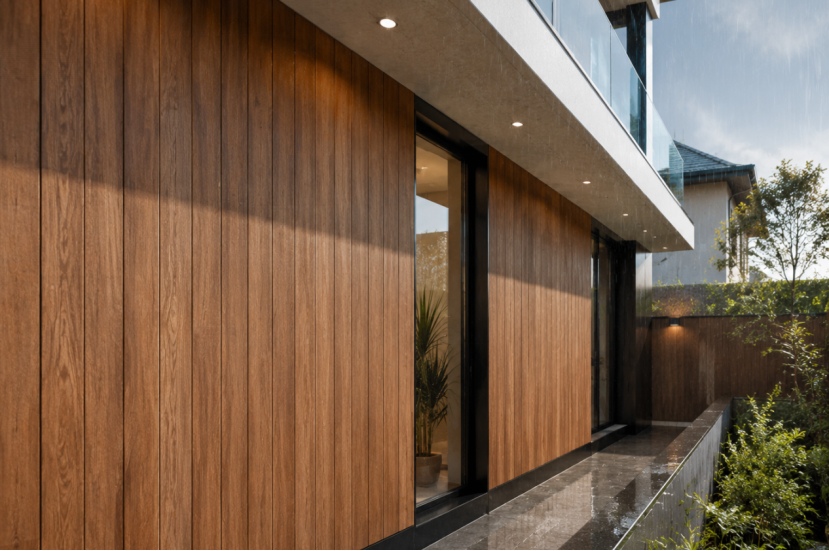
A boutique resort in the Mediterranean needed exterior villa cladding that could match its bespoke interior wall panels. The project required a warm wood look surface for seaside villas, but natural timber was not ideal because of strong sun exposure, salt spray, moisture, and long term maintenance concerns.
The resort selected MexyTech NovAS cladding for its exterior villa walls. After three years of intense salt spray and sunlight, the NovAS cladding maintained stable color performance without obvious fading. The deep 3D embossed surface also helped the exterior panels stay visually close to the bespoke interior panels, reducing the common “plastic look” problem often seen in ordinary outdoor WPC products.
Sustainability is becoming a key selection factor for designers, developers, and international buyers in 2026. In many projects, natural tropical hardwoods such as Ipe or Teak are still valued for their premium look, but they also raise concerns about sourcing, cost, maintenance, and environmental impact.
WPC provides an alternative path. By combining wood fiber and plastic composite materials, WPC can reduce reliance on tropical hardwood while still providing a wood like appearance. MexyTech’s use of recycled materials further supports this direction, helping projects reduce material waste and improve the sustainability story behind their facade and wall panel systems.
Natural wood possesses a familiar, natural beauty, but it also requires regular maintenance. Painting, sealing, pest control, and repairs all contribute to long term costs. MexyTech's WPC cladding panels offer advantages such as water resistance, mildew resistance, termite resistance, UV resistance, low maintenance, and stability.
Low maintenance costs are paramount for exteriors. A well performing cladding system makes the entire design easier to manage over the long term. Interior walls may be aesthetically pleasing from the start, but exterior walls need to withstand the test of each season.
MexyTech supports indoor and outdoor WPC wall panel projects by combining design consistency with outdoor grade product performance. The key is not just whether a supplier can manufacture indoor and outdoor WPC wall panels. More importantly, it's whether the exterior wall cladding can maintain consistency with the interior wall panels in color, texture, and surface quality while meeting outdoor performance requirements. MexyTech is ideal for meeting these needs, especially for projects requiring a consistent design and outdoor grade reliability.
In 2026, the integration of interior and exterior wall cladding is not simply about transferring interior materials outdoors, but about unifying colors, textures, and material language while selecting WPC products suitable for different environments. Outdoor wall panels, requiring stronger weather resistance, waterproofing, and UV protection, often struggle to maintain the same fine texture as interior wall panels; therefore, a supplier's outdoor product capabilities deserve priority evaluation.
MexyTech can help designers, developers, and distributors establish a more harmonious product line connection between interior decorative wall panels and outdoor WPC wall cladding. Welcome to request samples from MexyTech, compare finishes, and discuss project needs to create a more consistent and durable WPC wall panel solution.
Q1: Can indoor WPC wall panels be used outdoors?
A: Usually no. Indoor WPC wall panels are mainly designed for decoration and interior use. Outdoor areas need weather resistant WPC wall cladding.
Q2: What is the difference between WPC wall panels and WPC wall cladding?
A: WPC wall panels often refer to interior decorative panels, while WPC wall cladding is usually designed for exterior walls, facades, balconies, and patios.
Q3: Are outdoor WPC wall panels waterproof?
A: Outdoor WPC wall panels are generally designed with water resistance, but buyers should still check water absorption data and installation requirements.
Q4: Why do some outdoor WPC panels look more plastic?
A: Outdoor panels need stronger UV resistance, weather resistance, and surface durability, so some products may have a less natural texture than indoor panels.
Q5: How do I choose WPC panels for indoor and outdoor matching?
A: Compare color, grain, surface texture, UV resistance, water resistance, fire data, and outdoor project experience before choosing a product line.