English

Views: 0 Author: Site Editor Publish Time: 2026-07-17 Origin: Site
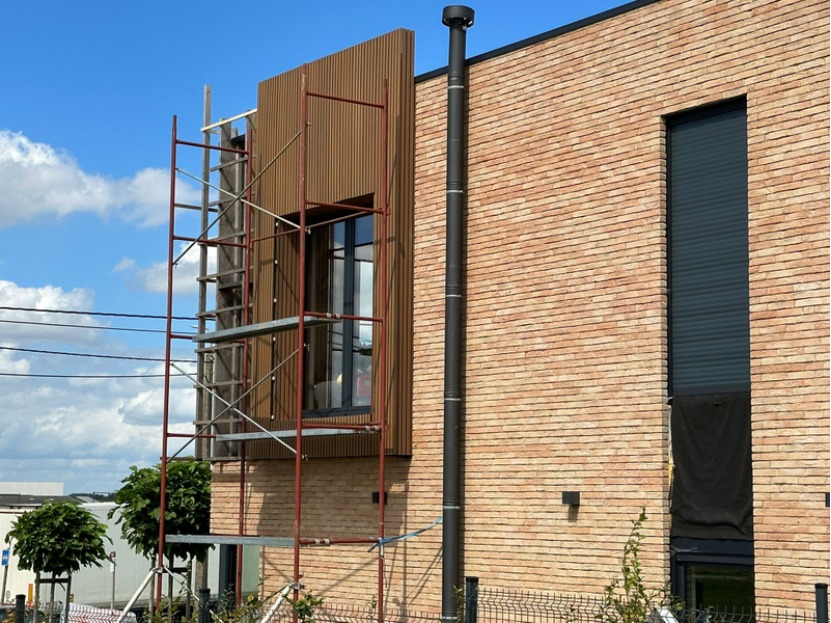
A composite wall cladding manufacturer's real innovation is no longer visible on a single spec sheet line. It shows up across four separate processes: how the material itself has evolved (PVC → first-generation WPC → co-extruded WPC → ASA), how the surface texture is engineered to remove the plastic look, how the panel is fixed on site, and how carbon impact is tracked across the product's lifecycle. Third-party test data already shows that co-extruded WPC wall cladding outdoor has solved most of the classic fading and moisture problems. The open question buyers should now ask is narrower and more specific: what does ASA actually add on top of an already weather-stable co-extruded WPC panel? The answer is not "better color" — it is lighter weight and improved fire performance, two dimensions co-extruded WPC alone has not fully resolved.
Exterior wall cladding faces four compounding stresses: UV radiation, rain cycling, thermal expansion/contraction, and airborne pollutants. A single new material cannot address all of these on its own. That is why the composite wall cladding manufacturers actually worth evaluating are innovating across four connected processes:
1. Material formulation — from PVC to co-extruded WPC to ASA, each generation closing a specific gap the last one left open
2. Surface texture engineering — removing the "plastic look" that undermines an otherwise durable panel
3. Installation system design — reducing on-site labor and error without skipping structural requirements
4. Lifecycle carbon tracking — replacing vague "eco-friendly" claims with verifiable, stage-by-stage data
PVC cladding remains valid for cost-sensitive projects. It is light, moisture-resistant, and low-maintenance. Its limitations: a less convincing wood-grain appearance, a higher coefficient of thermal expansion than wood-fiber composites (making dimensional stability under large temperature swings a real concern), and UV resistance that varies significantly depending on the specific formulation.
First-generation WPC wall cladding introduced genuine wood fiber into the panel, giving it a more authentic surface feel and workability than PVC. But with wood fiber exposed directly at the surface and no protective cap layer, this generation faced its most serious limitation outdoors: visible fading, surface chalking, and moisture absorption into the wood fiber within just a few years of full sun and rain exposure.
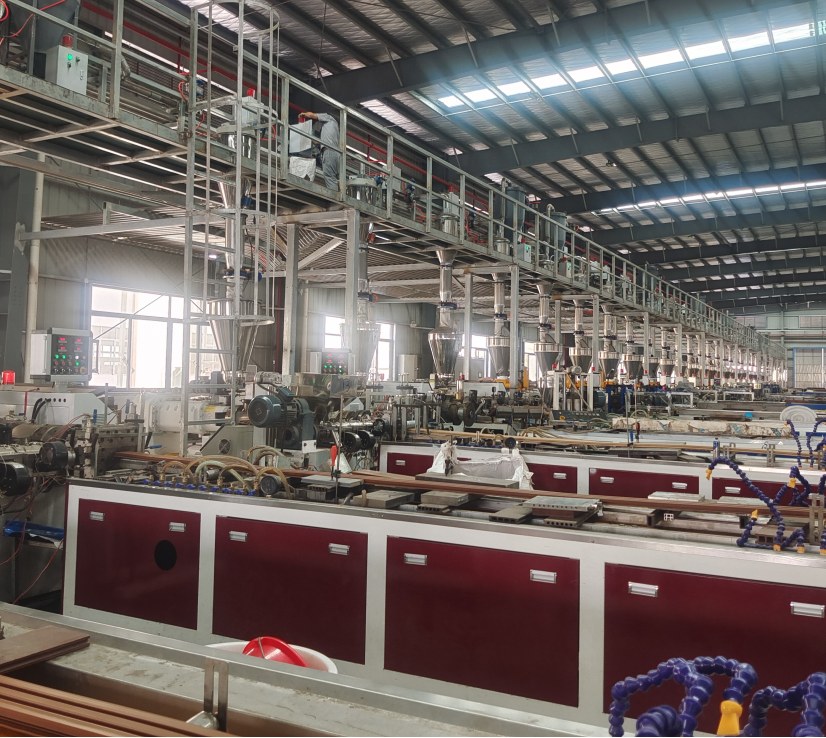
This is the point most sourcing conversations get wrong. Co-extrusion — adding a dedicated protective outer layer around the WPC core during production — has already closed the weathering gap. This is not a marketing claim; it is confirmed by independent testing:
Test | Standard | Result | Report Reference |
Accelerated UV photoaging | 3000 hours | Confirmed reduced fading and chalking vs. uncapped WPC | SDHL2311020050HI |
Water absorption rate | Immersion test | Cap layer measurably reduces moisture ingress into the core | SDHL2310019109HI / SDHL2311019610HI |
Surface friction / slip resistance | EN 15534-1, AS4586 | Stable performance retained after weathering | SDHL2311020374HI |
In other words: for buyers sourcing WPC wall cladding outdoor for moderate-to-standard climate exposure, co-extruded WPC's anti-fade and moisture performance is already a mature, well-documented technology. This changes the question a buyer should ask about ASA. It is not "does ASA fade less than WPC" — co-extruded WPC already fades very little. The real question is what problem is still unsolved after co-extrusion.
Two things remain difficult for standard co-extruded WPC, and this is exactly where ASA co-extrusion earns its place as the next material generation:
1. Weight. Standard WPC has a density of roughly 1.2–1.4 g/cm³ because the wood-fiber-and-plastic core makes up most of the panel's mass. On large façade installations, this self-weight translates directly into heavier keel/bracket structural requirements, higher shipping cost, and more physically demanding on-site handling. ASA co-extrusion panels — using an ASA outer shell over a lighter core structure — bring density down to roughly 0.7–0.85 g/cm³, meaningfully reducing panel weight without giving up the wood-grain surface effect.
2. Fire performance. As covered in the flame-retardant trade-off well documented across the WPC industry, pushing a wood-fiber-core panel's fire rating higher generally requires heavy flame-retardant loading, which reduces flexural strength and drives up cost. ASA's outer shell is not built on a wood-fiber base, so it does not carry the same trade-off. Third-party testing confirms ASA cladding with a flame-retardant formulation reaching Class B under EN 13501-1 (report SDHL250200203201HI) — a fire performance tier that is harder for a standard wood-fiber-core WPC panel to reach without the structural penalty described above.
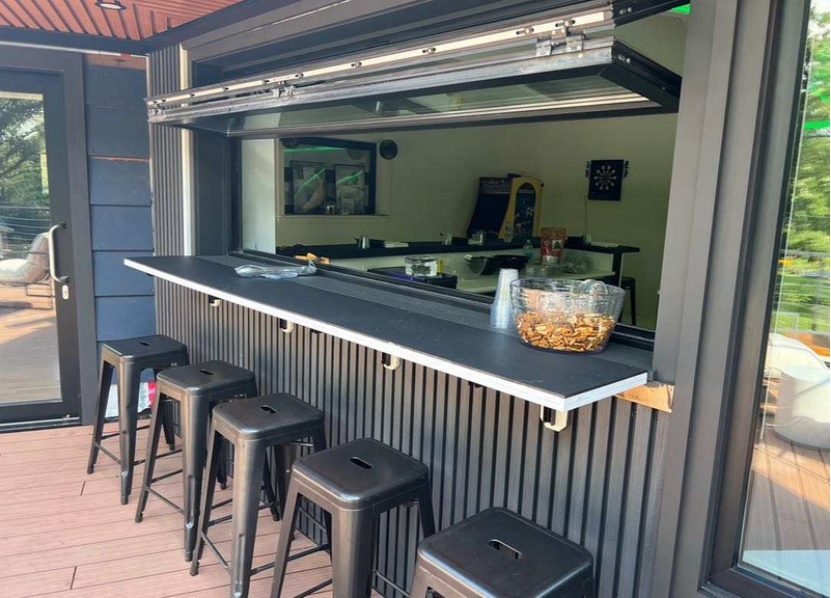
Supporting data on ASA cladding-grade material:
Test | Standard | Result | Report Reference |
Fire performance | EN 13501-1 | Class B with flame-retardant formulation | SDHL250200203201HI |
Freeze-thaw resistance | Exterior wall test protocol | Passed, no surface delamination | SDHL250601030601HI |
Water absorption | Immersion test | Low absorption rate confirmed | SDHL2408014917HI |
Linear thermal expansion | Dimensional stability test | Lower expansion coefficient supports panel weight/dimension stability | GZIN2410001673CM01-1 |
REACH compliance | EU REACH regulation | Passed, no restricted substances above threshold | SDHL260300501601HI |
The correct framing for buyers: co-extruded WPC wall cladding outdoor already handles standard weathering well. ASA becomes the relevant upgrade specifically for large-panel façade projects where weight matters structurally, or projects with fire-rating requirements that standard WPC formulations struggle to meet without sacrificing strength — not simply "wherever the budget allows for it."
Durability does not sell a cladding panel on its own — appearance does. Low-quality composite boards typically fail on three visual points: repeating texture patterns that reveal the mold cycle at a glance, glossy surfaces that read as synthetic in direct sunlight, and flat single-tone coloring with none of the natural variation found in real timber.
The texture-engineering process behind a modern composite wall cladding manufacturer's product line addresses this through:
· Deep 3D embossing that replicates wood grain grooves and growth-ring irregularity, rather than a shallow surface print
· Matte or sand-textured finishing that eliminates the reflective, plastic-like sheen common in early-generation composite panels
· Dual-tone or gradient coloring that mimics the natural color variation of real timber instead of a uniform flat tone
· Longer, lower-repeat-frequency texture rollers to avoid the visible "copy-paste" pattern that gives away a composite surface at close range
· Texture integrated directly into the wear-resistant cap layer, so the visual pattern does not degrade faster than the panel's functional surface
Among the three generations, ASA-capped panels currently deliver the strongest wood-like surface result. Because the ASA shell is a distinct engineering polymer rather than a HDPE-based cap, it holds a finer embossed texture and a more consistent matte finish over time — standard co-extruded WPC caps can gradually lose sharpness in the embossed grain as the surface weathers, while ASA's harder, more chemically stable shell resists this softening. For residential, hospitality, and commercial façade projects competing on visual quality, this is not a cosmetic detail — it directly supports premium positioning and pricing.
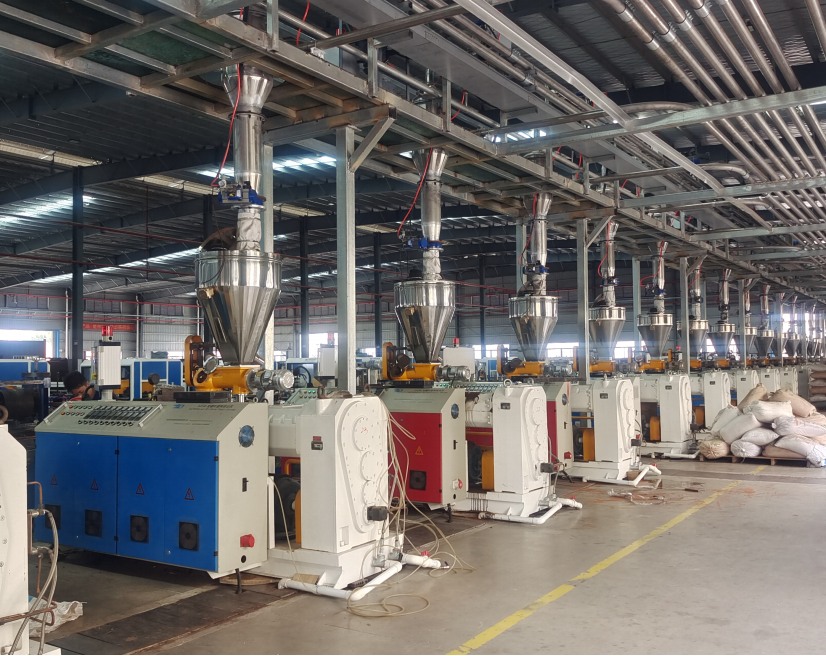
This is the innovation most easily misunderstood, so it is worth being precise about what actually changes.
A wall cladding panel cannot be nailed or screwed directly into a solid wall surface. Every outdoor cladding installation requires an intermediate keel or batten framework fixed to the wall first, with the cladding panel then fixed onto that keel — not onto the wall itself. Within that structure, the traditional process has always required a drilling step before fixing: the installer drills a hole at the correct point on site, then drives a nail or screw through that hole into the keel. This drilling step exists to prevent the panel or fastener from splitting the material and to keep the fixing point accurately positioned. It is done freehand, panel by panel, which means drilling accuracy — and therefore the tightness and visual alignment of the finished façade — depends heavily on individual installer skill.
Mexytech's pre-drilled direct-fix system removes this on-site drilling step entirely. Fixing holes are positioned and formed at the factory using CNC-controlled equipment, with hole spacing and diameter matched precisely to the keel module before the panel ever leaves the production line. On site, the installer no longer drills at all — the panel is aligned against the keel and the nail or screw is driven directly through the factory-formed hole into the keel in a single step. What used to be a two-step process — drill, then fix — becomes a single motion: align and fix.
This is a meaningful distinction from cladding systems that only pre-drill the panel but still require the installer to drill a matching pilot hole into the keel on site. In Mexytech's system, the keel-side step is also eliminated for standard keel modules, because the factory hole spacing is designed to match the keel layout directly. The only remaining site work is confirming keel alignment and driving the fastener — not creating a new hole.
Installation sequence:
1. Install and level the batten or keel support frame
2. Align the panel's factory pre-drilled fixing points against the keel
3. Drive the nail or screw directly through the pre-formed hole into the keel — no on-site drilling required
4. Maintain the specified expansion and ventilation gap
5. Install edge trims and complete a final inspection
Where the labor saving actually comes from:
Step | Traditional System | Pre-Drilled Direct-Fix System |
On-site drilling | Required before every fixing point, panel by panel | Eliminated — factory pre-drilling replaces it entirely |
Fixing-point consistency | Varies by installer, higher risk of visible misalignment | Fixed and repeatable across the entire façade run |
Number of on-site operations per fixing point | Two (drill, then fix) | One (align and fix) |
Risk of panel surface damage | Higher — manual drilling can crack or chip the finished face | Lower — panel-side holes are factory-finished |
Tooling required on site | Drill plus driver | Driver only |
Training burden for installation crew | Higher — drilling accuracy is skill-dependent | Lower — fewer decisions and tools involved on site |
Removing an entire operation from every single fixing point compounds quickly across a large façade. A mid-size commercial project can easily involve several thousand fixing points; cutting the per-point process from two operations to one has a direct, cumulative effect on crew size, schedule length, and the total labor cost billed to the project.
Important limitation: a pre-drilled panel system does not replace correct keel spacing, expansion joint design, or compliance with local building codes. It standardizes and speeds up the fixing process itself — it does not substitute for proper structural design or site-specific engineering review.
Buyers evaluating a composite wall cladding manufacturer's sustainability claims should request verification of:
· Raw material sourcing and the proportion of recycled content used
· FSC or equivalent chain-of-custody certification for wood fiber supply
· ISO quality or environmental management system certification
· Third-party chemical safety, emissions, and fire performance test reports
· Whether an EPD (Environmental Product Declaration) has already been published, is currently in preparation, or exists only as a stated intention
Certification claims must be tied to a specific product line, factory, and validity period. A general "eco-friendly" statement without a product-level or factory-level reference should be treated as a marketing claim, not a verified credential.
Lifecycle Stage | Where Carbon Reduction Happens |
Raw material | Traceable wood fiber sourcing and use of recycled feedstock |
Manufacturing | Reduced energy consumption, dust, offcut waste, and defect rate |
Transport | Lightweighting (relevant directly to ASA's reduced panel density) and packaging optimization |
Use phase | Weather-resistant, low-maintenance surfaces reduce the need for repainting or replacement |
End of life | Design for disassembly, material recovery, and closed-loop reuse pathways |
A credible manufacturer supports low-carbon claims with lifecycle-stage data, not a single generic "recyclable" label. If a manufacturer cannot break down where in the lifecycle their carbon reduction actually occurs, the claim is difficult to verify or compare against competitors. This is also why an EPD — a standardized, third-party-verified lifecycle report — carries more weight than a self-declared sustainability statement.
Use this checklist when evaluating a supplier:
· Can they explain, with test data, exactly what problem co-extruded WPC has already solved versus what ASA specifically adds (weight and fire performance, not just color)?
· Can they provide UV aging, water absorption, fire rating, and thermal expansion test reports with report numbers — not just summary claims?
· Does the wood-grain texture look convincing and low-repeat under natural daylight, not just in studio photography?
· Does the installation system eliminate on-site drilling entirely, or only pre-drill the panel while still requiring a separate keel-side drilling step?
· Do they provide complete installation documentation and technical support?
· Are environmental certifications and carbon data verifiable against a specific product and factory?
· Can they provide project references in a similar climate to yours?
Conclusion: Genuine innovation in a composite wall cladding manufacturer's process comes from four coordinated improvements — material formulation, surface texture, installation system, and verifiable carbon data — not from any single feature marketed in isolation. A manufacturer who can explain precisely what problem each material generation solved, and cite a specific test report number for every claim, is demonstrating exactly the kind of process innovation this buyer checklist is designed to surface.
CTA: Request samples, third-party test reports, or a project-specific material recommendation from Mexytech.
Q1: Does co-extruded WPC wall cladding outdoor already resist fading well, or is ASA required?
Co-extruded WPC has already solved most of the classic fading problem — 3000-hour accelerated UV aging testing (SDHL2311020050HI) confirms co-extruded WPC significantly outperforms uncapped, first-generation WPC on color retention. For standard climate exposure, co-extruded WPC alone is usually sufficient. ASA becomes the more relevant choice specifically when a project also needs reduced panel weight or a higher fire rating.
Q2: What does ASA actually improve over standard co-extruded WPC cladding?
Primarily two things: weight and fire performance. ASA co-extrusion panels have a density of roughly 0.7–0.85 g/cm³ versus 1.2–1.4 g/cm³ for standard WPC, reducing structural load and shipping cost. ASA cladding with a flame-retardant formulation has also achieved Class B under EN 13501-1 (SDHL250200203201HI), a fire tier that standard wood-fiber-core WPC formulations typically cannot reach without a significant strength penalty.
Q3: Can wall cladding panels be nailed directly onto a wall?
No. Cladding panels must be fixed onto an intermediate keel or batten framework, not directly onto the wall surface. Traditionally this also required drilling a hole on site before every nail or screw could be driven in, to prevent splitting and keep the fixing point aligned. A pre-drilled direct-fix system removes that on-site drilling step entirely — the installer aligns the panel against the keel and drives the fastener straight through a factory-formed hole in one motion.
Q4: What EPD verification should buyers require from a cladding manufacturer?
Buyers should ask whether an EPD has been published (not just planned), request the specific product scope it covers, confirm the issuing platform (e.g., EPD International, EPD-Norge, SCS-EPD), and check the certificate's validity period, since EPDs are typically valid for five years. A manufacturer citing EPD without a product-specific reference should be treated cautiously.
Q5: Which material generation has the strongest wood-like texture — WPC or ASA?
ASA-capped panels currently deliver the strongest and most durable wood-like texture of the three generations. Its engineering-grade polymer shell holds a finer embossed grain and a more consistent matte finish over time, while standard co-extruded WPC caps can gradually lose surface sharpness as the panel weathers.