English

Views: 0 Author: Site Editor Publish Time: 2025-11-07 Origin: Site

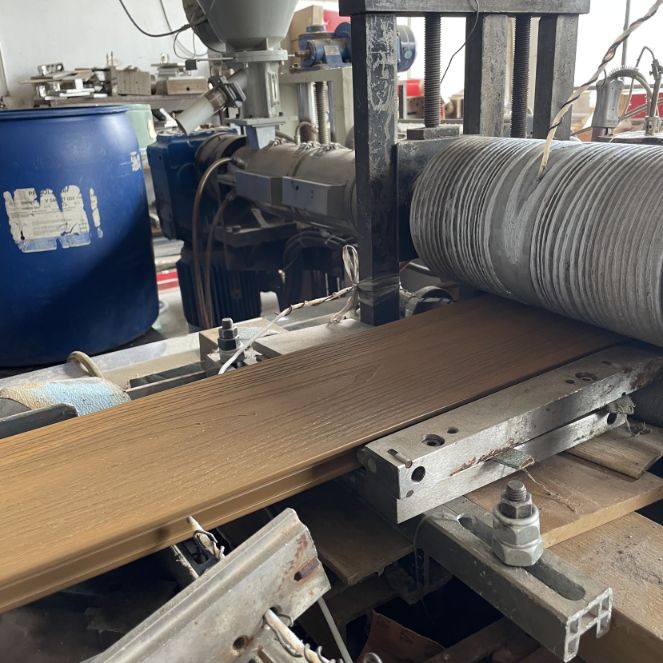
Have you ever noticed that some WPC decking starts to fade, warp, or lose strength just a few years after installation? Many buyers are drawn by low prices at first, only to face expensive repairs or replacements later.
The real issue often lies not in the raw materials—but in the precision of the manufacturing process, the invisible factor that determines a WPC product’s true lifespan.
Conventional WPC recipes often miss the mark. Imbalanced ratios of wood and plastics create brittle materials. Without proper additives, products succumb to UV rays or oxidation fast. Molecular bonds stay weak, leading to higher water uptake and early breakdowns.
MexyTech teams up with South China University of Technology, a top spot for material science in China. This partnership brings cutting edge research into their formulations. Experts there help refine recipes that boost product strength.
Getting the mix right matters a lot. At MexyTech, the WPC formula is precisely tuned to a ratio of 30% HDPE, 65% wood flour, and 5% functional additives, achieving an optimal density of 1.35 g/cm³. UV protectants defend against sunlight degradation, antioxidants slow down material aging, and coupling agents enhance the bonding between wood and polymer for lasting structural integrity.
At MexyTech, every component is precisely balanced—from the particle size and moisture content of wood flour, to the melt index and strength of HDPE or PP, and the accurate dosage of UV stabilizers, antioxidants, and coupling agents. This meticulous formulation ensures a seamless molecular bond, enhancing weather resistance, impact strength, and dimensional stability while minimizing water absorption and deformation.
This approach acts like a genetic code for durability. MexyTech's WPC products last longer because of it. Tests show they hold up for years where others fail early.
Ever notice how some composites look great at first but fade fast? That's often due to sloppy mixing. MexyTech avoids that trap.
The WPC world has its headaches. Batch variations creep in from inconsistent materials. Moisture levels fluctuate, messing with quality. Mixing errors lead to weak spots.
· Uneven wood flour sizes cause clumping.
· Plastic ratios off by a bit weaken the whole batch.
· Human handling introduces dust or errors.
· Batch to batch variations caused by manual or semi automatic feeding
These issues shorten product life, leading to cracks or breaks sooner than expected.
MexyTech tackles this with a fully automated setup. No hands touch the process, reducing mistakes. It's all machines, all the time.
Raw materials start in storage silos. Then, automatic weighing kicks in for exact amounts. Closed loop pipelines convey everything without exposure. High speed hot mixing blends it all perfectly.
Every batch comes out the same. Uniform performance means no surprises. Products avoid localized defects that cause early failures. Stability like this extends lifespan significantly.
In a way, it's like baking bread. If measurements vary, you get flat loaves. Consistency is key.
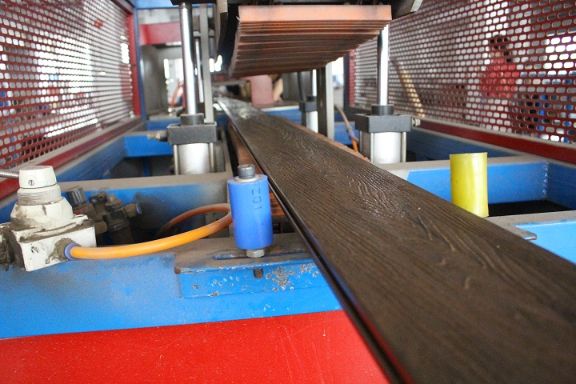
Old extrusion techniques often underperform. Loose temperature management burns plastics or leaves unmelted bits. Low densification results in porous structures prone to water ingress and breakage.
Extrusion isn't just about shaping. It's the step that packs the material dense and stable. Molten mix gets forced through a die, forming boards or profiles.
Barrel and die temperatures stay precise. Too hot, and plastics degrade. Too cool, and it doesn't melt fully. This balance ensures top notch quality.
High density builds flexural strength for bending without breaking. Impact resistance improves against drops or hits. Lower water absorption keeps moisture out, fighting decay.
All this adds up to products that thrive in harsh weather. Rainy seasons or scorching summers? No problem.
Occasionally, people ask why some WPC feels flimsy. Often, it's poor densification during extrusion.
Basic post-processing skips depth. Surfaces lack robust textures, inviting scratches and UV wear. Protection remains superficial, accelerating deterioration.
MexyTech uses online embossing right after extrusion. This creates deep textures that mimic real wood grains. It’s not just for looks; it toughens the surface and improves slip resistance, making the decking safer to walk on even in wet conditions.
Textures boost scratch resistance, so daily wear doesn't show. UV protection gets enhanced, slowing color fade. Overall, products stay attractive and strong longer.
Aesthetics and durability go hand in hand here. Scratched up decks look old fast, but embossing helps them age gracefully.
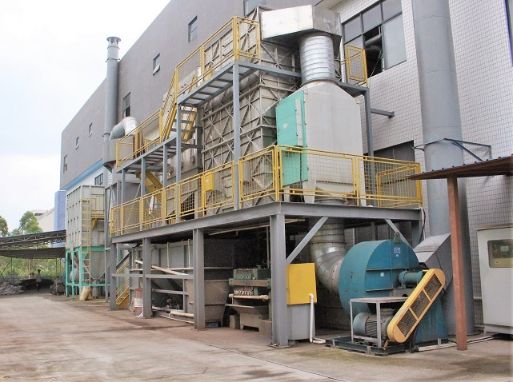
Many older processes ignore emissions. VOCs escape unchecked, harming air and potentially tainting products. Sustainability takes a backseat, affecting long-term quality.
Sustainability isn't an afterthought at MexyTech. They use activated carbon adsorption to trap harmful gases. Electrostatic precipitators catch particles. These systems remove VOCs during production.
Clean processes mean better materials. No contaminants weaken the composites. Environmentally responsible methods support durable products that don't need replacing often.
Reducing waste helps the planet and ensures quality. It's a win win.
You know, in manufacturing, cutting corners on emissions can backfire on product quality too.
MexyTech's success boils down to smart formulation from university partnerships. Automated systems guarantee consistency. Extrusion densifies for strength. Post treatments add protection. Environmental efforts tie it all together.
· Scientific mixes resist weather and impacts.
· Automation eliminates variations.
· Precise extrusion builds density.
· Embossing enhances surfaces.
· Green practices sustain quality.
These steps create WPC products with exceptional lifespans.
Curious about MexyTech's offerings? Check out their WPC products online. Reach out for partnerships. Or grab a sample to see the difference yourself.
In the end, choosing durable materials saves time and money. MexyTech delivers that reliably.
A: Wood Plastic Composite, blends wood flour with plastics for rot proof, low maintenance outdoor use.
A: South China University of Technology backed formulas, exact ratios, and full automation keep every batch uniform and dense.
A: It packs the material tight, boosting strength, impact resistance, and cutting water uptake.
A: Adds deep wood like texture plus extra scratch and UV protection without separate steps.
A: Yes, activated carbon and electrostatic systems trap VOCs and dust during production.